Perched between the Salzach River and the commanding Hohensalzburg Fortress, Salzburg has been shaping empires, arts, and pilgrimages for millennia. From Roman trading posts to Mozart's birthplace and a UNESCO World Heritage Site, every cobblestone here whispers a different century.
Long before Mozart or archbishop palaces defined Salzburg, the region's story began with salt. Celtic tribes, particularly the Norici, mined salt in the surrounding Salzkammergut mountains as early as 600 BCE, trading it across Central Europe and giving the city its very name — Salzburg literally means 'Salt Fortress.' The Romans, recognising strategic and commercial value, established the settlement of Juvavum on the same site around the 1st century CE. Juvavum grew into a prosperous Roman municipium, complete with a forum, baths, and a road network connecting it to the broader empire. Traces of this Roman past still surface beneath modern Salzburg's streets during archaeological excavations.
After Rome's decline in the 5th century, the region fell into a period of transition under various Germanic groups. It was the arrival of Saint Rupert of Worms around 696 CE that truly relaunched Salzburg's destiny. Invited by the Bavarian Duke Theodo, Rupert refounded the city, established St. Peter's Abbey — still active today and one of the oldest monasteries in the German-speaking world — and began Christianising the surrounding population. He also founded Nonnberg Abbey in 714 CE, the oldest continuously inhabited convent north of the Alps. These twin foundations gave Salzburg its enduring identity as a city of faith, culture, and civic ambition.
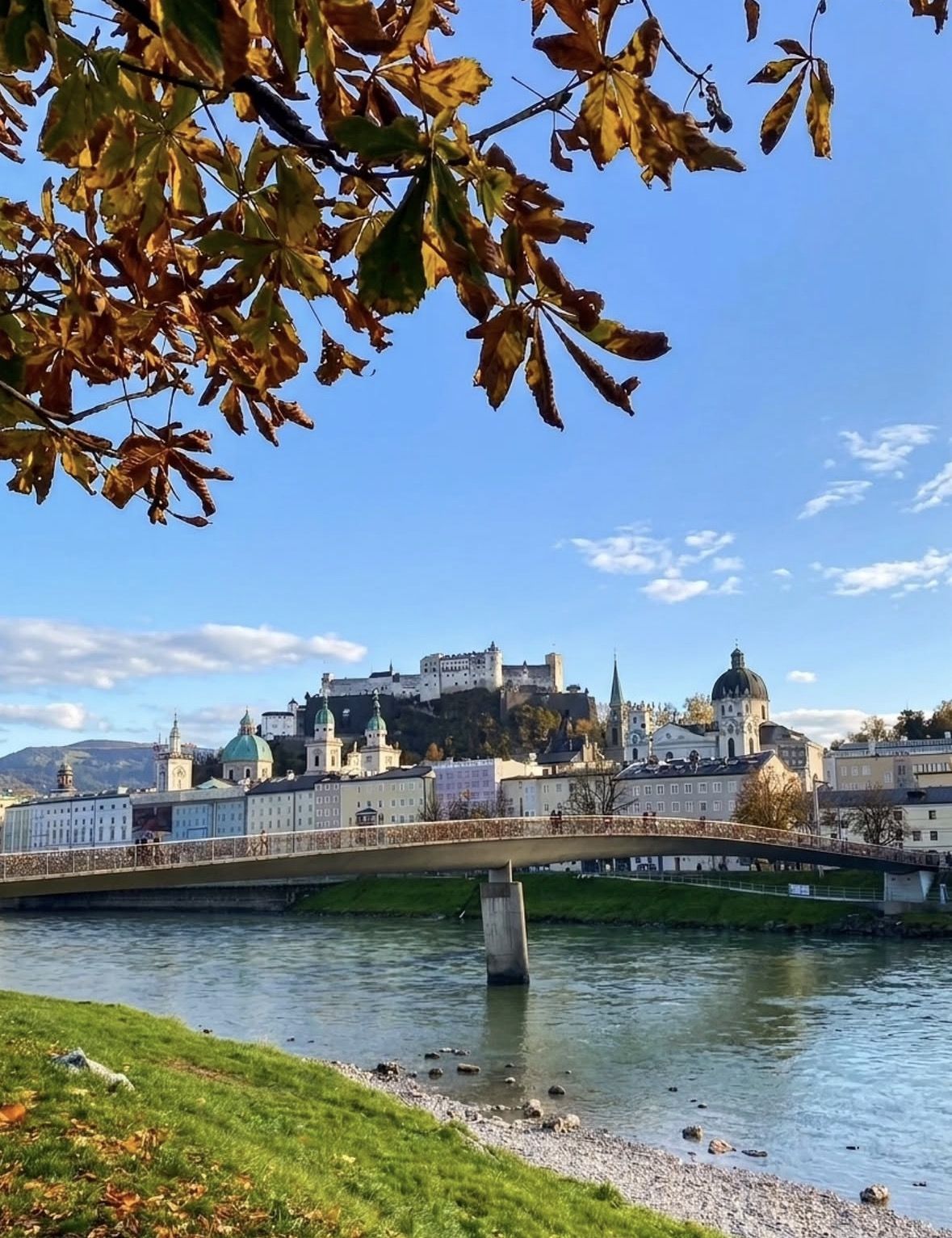
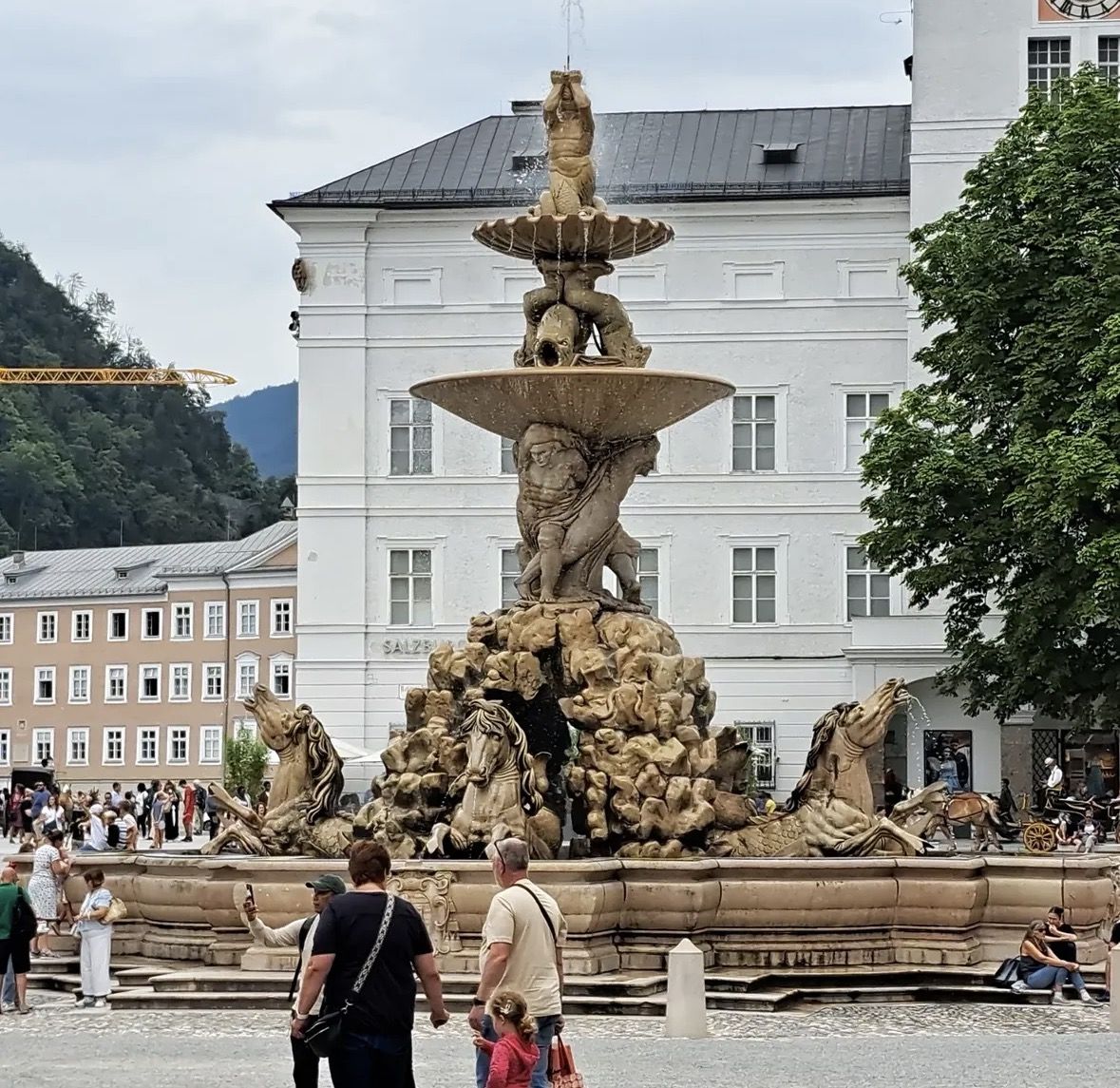
For nearly a thousand years, from 798 CE until Napoleon's dissolution of the ecclesiastical state in 1803, Salzburg was governed not by kings or dukes but by prince-archbishops — powerful church leaders who wielded both spiritual and secular authority. This extraordinary arrangement produced a city of astonishing architectural ambition. Archbishop Wolf Dietrich von Raitenau, who came to power in 1587, proved the most transformative of all. Inspired by Rome and enamoured with Italian Baroque aesthetics, he demolished much of the medieval city centre and commissioned the DomPlatz cathedral square, the Mirabell Palace, and a series of grand fountains and gardens that redefined Salzburg's urban character entirely.
Wolf Dietrich's successors continued his vision with equal fervour. Archbishop Markus Sittikus completed Salzburg Cathedral between 1614 and 1628, modelling it on St. Peter's Basilica in Rome and creating the first entirely Baroque cathedral north of the Alps. His successor Paris Lodron fortified the city during the Thirty Years' War, shielding Salzburg from devastation that ravaged much of Central Europe. Later, Archbishop Johann Ernst von Thun commissioned Johann Bernhard Fischer von Erlach — one of Austria's greatest Baroque architects — to design the Collegiate Church and the Trinity Church, cementing Salzburg's reputation as a showpiece of Counter-Reformation grandeur and Italian-influenced architectural genius transplanted to the Alpine world.
The prince-archbishops were also lavish patrons of music and the performing arts. The Salzburg court maintained orchestras, opera productions, and resident composers throughout the 17th and 18th centuries, creating an environment in which musical talent could flourish at the highest level. It was this culture of artistic patronage that drew the Leopold Mozart family to serve at court — and that provided the formative backdrop for young Wolfgang Amadeus Mozart, born in Salzburg on 27 January 1756. Though Mozart famously chafed under Archbishop Hieronymus Colloredo's authority and ultimately left for Vienna in 1781, his genius was unmistakably nourished by the musical richness of his hometown and its centuries-old ecclesiastical tradition.
The dissolution of the prince-archbishopric in 1803 under Napoleonic reorganisation ended over a thousand years of ecclesiastical rule. Salzburg passed briefly to Austria, then to Bavaria, and finally back to Austria permanently in 1816 following the Congress of Vienna. The 19th century brought railways, tourism, and a growing awareness of the city's cultural heritage. The opening of the rail connection to Vienna in 1860 placed Salzburg firmly on the Grand Tour circuit for wealthy European travellers, who arrived to admire the fortress, stroll through the Mirabell Gardens, and pay homage at Mozart's birthplace, which had been preserved and opened to the public as a museum in 1880.
The founding of the Salzburg Festival in 1920 marked a watershed moment in the city's modern identity. Conceived by playwright Hugo von Hofmannsthal, composer Richard Strauss, and theatre director Max Reinhardt, the festival was a deliberate act of cultural renewal in the aftermath of World War One. Beginning with a production of Hofmannsthal's Jedermann — a morality play that is still performed annually on the steps of Salzburg Cathedral — the festival rapidly evolved into one of the world's most prestigious classical music and opera events. Today it draws over 260,000 visitors each summer and features performances by the world's leading conductors, soloists, and opera companies across venues throughout the historic city.
The 20th century brought both hardship and global fame. Austria's annexation by Nazi Germany in 1938 cast a dark shadow over Salzburg, and the festival was briefly hijacked for propagandistic purposes before closing during the war years. Reconstruction and renewal followed, and in 1965 a very different kind of cultural spotlight arrived: the release of the Hollywood film The Sound of Music, filmed largely on location around Salzburg and the surrounding lake district. Though the film's storyline diverges significantly from historical fact, it ignited a wave of international tourism that has never truly subsided, introducing Salzburg to audiences across North America, Asia, and beyond who might never otherwise have discovered it.
Today Salzburg is a city of remarkable contrasts — ancient and contemporary, sacred and secular, Alpine and cosmopolitan. The UNESCO-listed historic centre preserves an almost intact Baroque cityscape, where grand cathedral squares, elegant fountains, and labyrinthine alleyways coexist with boutique hotels, artisan coffee houses, and cutting-edge galleries. The Hohensalzburg Fortress, completed in its essential form by the 15th century, still dominates the skyline and welcomes over a million visitors annually. Meanwhile, the Museum der Moderne on the Mönchsberg cliff offers a striking counterpoint — a temple of contemporary art cantilevered above centuries of history, accessible by funicular from the old town below.
Salzburg's rhythm is shaped by its festivals, its music, and its mountain setting. Whether you attend a Mozart concert in the Mozarteum, walk the Sound of Music filming locations through the Salzkammergut, taste Mozartkugeln chocolates in the Getreidegasse, or simply watch the evening light turn the fortress walls to gold from the Staatsbrücke bridge, the city rewards slow, curious travel. Few places on earth compress so much history, beauty, and cultural achievement into so compact and walkable a space. Salzburg is not merely a destination to be ticked off — it is a place to be understood, savoured, and, if you are very lucky, to return to again and again.
Ready to Experience It Yourself?
From fortress ramparts to Baroque cathedral squares, Salzburg's 2,000-year story comes alive on a guided tour led by expert local historians. Browse our handpicked selection of Salzburg tours and experiences to find the perfect way to explore this UNESCO World Heritage masterpiece. Book today and step directly into one of Europe's most captivating cities.
Book Your Tour Now