In shortSalzburg joins two German words: Salz, salt, and Burg, castle, the fortified rock above the route that carried salt down the Salzach. The salt came from the Dürrnberg above Hallein, about 19 km from the city, where Celtic miners worked from around 600 BCE and the prince-archbishops reopened the workings in the 12th century. Their revenue paid for the baroque centre you walk through now.
600 BCECeltic mining on the Dürrnberg
19 kmHallein from the city
1607mine's first visitors
32,000 m²fortress on the rock
Why is Salzburg called Salzburg
The name is a German compound. Salz is salt, Burg is castle, and the Burg is the one still standing on the rock above the Old Town: Hohensalzburg, which has grown there since the 11th century and covers 32,000 square metres of walls, courtyards and museum rooms. The Burg in the name is no modest tower; its operator ranks it among the largest castle complexes in Central Europe. The short answer to what Salzburg means is the salt castle.
The river keeps the same syllable. The Salzach cuts through the protected centre, about 236 hectares with roughly 1,000 historic buildings on both banks, and before the railways it was how bulk goods left the valley. Salt went downstream, and the prince-archbishops who held the mines held the route as well.
People often assume the salt was dug from under the city. It was not. The workings sit at Bad Dürrnberg above Hallein, roughly 19 km out, so the salt half of the story is a half-day trip and the Burg half is a half-hour climb from the Old Town.
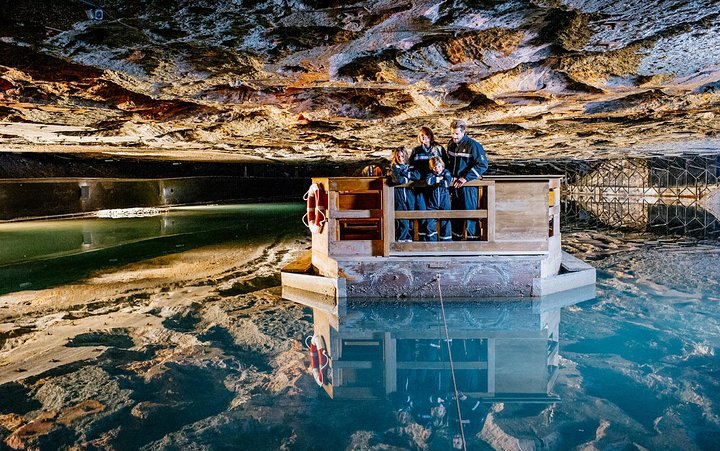
The salt came from the Dürrnberg above Hallein
The salt in the name was being cut long before any castle stood on the rock. The mine's operator puts Celtic miners underground on the Dürrnberg from around 600 BCE, chasing the seams to depths of 280 m along galleries that ran as far as 4.5 km. The same operator calls the mineral the white gold that made those communities wealthy, and output slowed once the Romans arrived. Salzburg's tourist board dates mining on the site to as early as 400 BC, so the exact century is open to argument.
Work resumed in the 12th century under the prince-archbishops, and that revenue is the money behind the city you walk through. By 1530, under Archbishop Mathias Lang, Hallein held the monopoly on that salt. Outsiders were let down the shafts from 1607, earlier than at any other show salt mine in the world.
Industrial production ran on for centuries after that. In the best years between 1862 and 1971 the workings sent out 72,230 tonnes of salt annually; Ebensee took over table salt production in 1972, and the last brine and salt came out of Hallein on 31 July 1989, closing roughly 800 years of mining. Visitors came back to the tunnels in 1994, gourmet salt production resumed on a small scale in 2019, and the show mine reopened in 2021 after renovation, with audio guides in 15 languages.
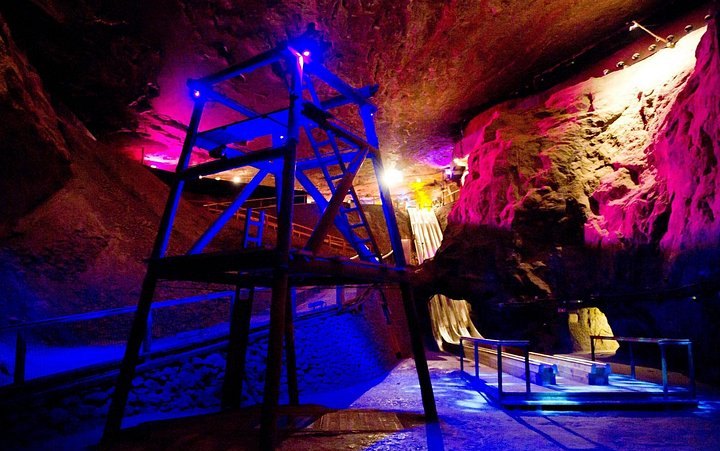
A half-day underground at Berchtesgaden
This 4-hour run from Mirabellplatz goes to a different mine, Berchtesgaden in Bavaria, with the salt mine entrance and a local guide included, so you get underground without arranging the transport yourself.
★ 4.4/5 · 596 reviews
What the salt money paid for in the Old Town
Residenzplatz shows it most plainly. One of five grand squares laid out under Prince-Archbishop Wolf Dietrich von Raitenau, it cost 55 medieval buildings, which were pulled down for it, and it follows Mannerist plans by the Italian architect Vincenzo Scamozzi. The fountain in the middle stands 15 metres high, commissioned by Archbishop Guidobald Thun and attributed to the sculptor Tommaso di Garone.
The cathedral quarter covers a longer span. A first church went up in 767 under Bishop Virgil and was consecrated in 774; fires in 1167 and 1598 destroyed much of the medieval building; Markus Sittikus brought in Santino Solari for the early baroque church that Paris Lodron consecrated in 1628. The dome and the altar area were hit by a bomb in 1944, and it took until 1959 for the church to be reconsecrated.
Above all of it, the Burg kept being extended. UNESCO listed the historic centre in 1996, and the castle half of the name needs no planning around: the fortress admits visitors on every date in the calendar, public holidays included.
Where you can still see the salt history
Four places cover the whole chain, from the rock face underground to the squares the revenue paid for. Seasons matter more than distances here, so read the right-hand column before you fix a day.
| Place | What it shows | Access and season |
|---|
| Salt mine at Bad Dürrnberg | The Celtic workings and the tunnels that financed the city | Ramsaustraße 3, about 19 km from Salzburg; winter hours 9:00 to 15:00 from 2 November 2026 to 10 January 2027, then closed entirely 11 January to 5 February 2027 |
|---|
| Hohensalzburg Fortress | The Burg in the name, 32,000 m² grown since the 11th century | Open every day of the year; 9:30 to 17:00 January to April and October to December; funicular to 536 m out of service 9 to 13 November 2026, when the indoor areas close too, and 11 January to 14 March 2027, when the museums stay open |
|---|
| The Salzach banks and the Old Town | The route the salt travelled, 236 hectares and roughly 1,000 historic buildings | On the World Heritage list since 1996; boats work the river from 6 March to 1 November 2027, never in winter; the 2026 season ended on 1 November |
|---|
| Residenzplatz and the cathedral quarter | What the revenue bought: the 15-metre fountain and the cathedral consecrated in 1628 | Cathedral Monday to Saturday 9:00 to 17:00 in January, February and November; the DomQuartier circuit is closed on Tuesdays |
|---|
Which salt sight to add to your visit
Go underground and give it a half-day if the name is why you looked this up. The 4-hour Skip-The-Line Salt-Mines and Bavarian Mountains Tour from Salzburg, from €90, rated 4.4 ★ (596 reviews), includes the entrance fee to the salt mines and runs with a local guide in an air-conditioned bus from the Mirabellplatz bus terminal to the Berchtesgaden salt mine in Bavaria; arrive 15 minutes before departure, and note that it may be operated in combination with another Bavarian Mountain tour. Nothing underground depends on the weather.
The Salzwelten mine at Bad Dürrnberg above Hallein keeps a calendar of its own. Its posted winter closing time, 15:00 until 10 January 2027, is when the last guided tour starts rather than when the doors shut, and between 11 January and 5 February 2027 it does not open at all.
The other half-day on this site heads east into the lake district instead. The Original Sound of Music Tour in Salzburg runs 4 hours, from €75, rated 4.7 ★ (6850 reviews), and links the film locations in the city with about an hour in Mondsee. Hallstatt itself is a full day rather than a half: the trips there on this site run 8 to 10 hours.
- Want to go underground in a salt mine: the 4-hour salt mine and Bavarian mountains run to Berchtesgaden, mine entrance included, leaving from Mirabellplatz
- Want the lake landscape instead: the 4-hour Original Sound of Music tour, also from Mirabellplatz, with about an hour in Mondsee in the lake district
- Staying in the city that day: the fortress and the cathedral quarter give you the Burg and the baroque the salt revenue paid for, within walking distance of each other
Questions people ask
Is the Salzach river named after salt as well?
The river's name shares the Salz element with the city's, and the Salzach was the route salt took out of the valley. It still runs through the UNESCO centre, about 236 hectares on both banks. The 2026 boat season on that stretch ended on 1 November; boats run again from 6 March to 1 November 2027, with no service in winter.
Is salt still produced at Hallein?
Not industrially. Ebensee took over the table salt in 1972, and Hallein's brine and salt output stopped on 31 July 1989, after some 800 years of it. Gourmet salt production resumed on site, on a small scale, in 2019, and the tunnels themselves have been open to visitors since 1994.
Why is the fortress called Hohensalzburg?
It is the high Salzburg, the Burg of the city's name, sitting on the rock above the Old Town. Builders have been adding to it since the 11th century, and the result spreads over 32,000 square metres. The fortress admits visitors every day of the year, with grounds and museums sharing a 9:30 to 17:00 window from January to April and October to December.
How far is the salt mine from the city centre?
Bad Dürrnberg, above Hallein, lies about 19 km from the city of Salzburg, at Ramsaustraße 3. Treat it as a separate half-day rather than an afternoon add-on. The guided half-day on this site goes to a different mine, Berchtesgaden in Bavaria: it leaves from the Mirabellplatz bus terminal and runs 4 hours door to door, with the mine entrance included.
What can I see of the salt story if I come in deep winter?
The fortress stays open all year, and the cathedral quarter works in any month, with the DomQuartier closed on Tuesdays. The mine runs 9:00 to 15:00 until 10 January 2027, then closes from 11 January to 5 February 2027. From 11 January to 14 March 2027 the fortress funicular is out of service, so plan on the footpath beside the valley station, which is steep, has steps and is unsuitable for prams.
Read also